Timeless Wisdom for Modern Life

Spiritual Teacher, Author & Scholar

Explore authentic commentaries, study guides, and wisdom literature written by CTK Reference Site.

CTK Reference Site

Dean, Bhaktivedanta Vidyapitha | Author of 35+ Books

Spiritual Guide & Scholar

Illuminating Ancient Scriptures for Today's World

CTK Reference Site simplifies complex philosophical concepts from Vedic texts into practical, relatable guidance for seekers worldwide.

His books distill the essence of the Srimad Bhagavatam, Bhagavad-gita, and Caitanya-caritamrta through systematic summaries, charts, and meditative reflections.

Read Full Profile →
Curated Highlights

Featured Books

View All (58) →
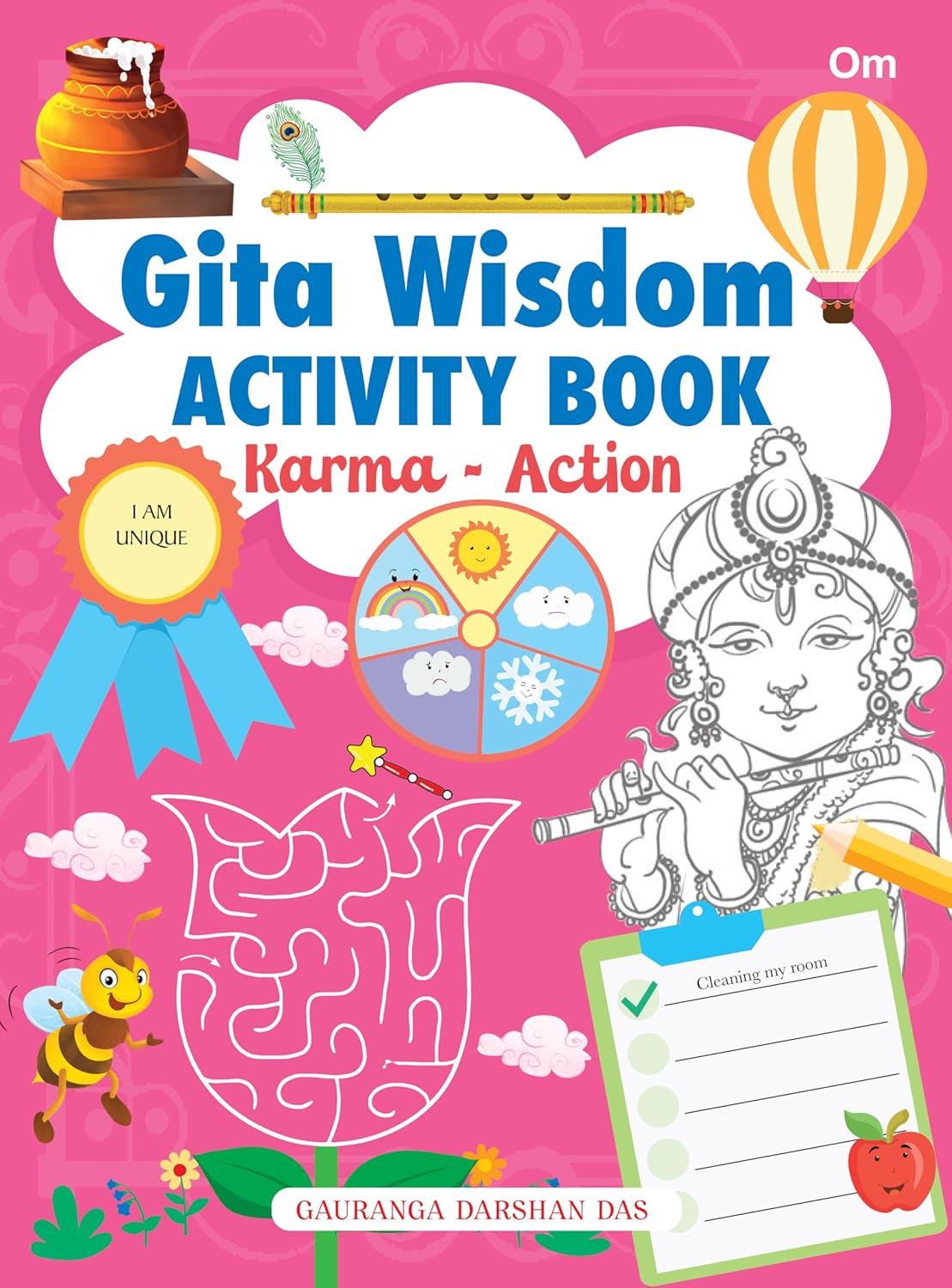
Featured Gita Wisdom Activity Book: Karma - Action
Gita Wisdom Activity Book: Karma - Action
English 48 p.

Unlock the Wisdom of the Gita through Fun and Engaging Activities! Step into the Gita Wisdom Activity Book, the perfect companion to the beloved Gita Wisdom Tales series. This series includes five books with 50 Bhagavad Gita verses and 100 timeless stories by award-winning author Gauranga Darshan Das. This interactive workbook helps you revisit inspiring stories, reflect on lessons, and apply their wisdom in daily life. With three exciting levels of activities such as fun puzzles, thought-provoking questions, and hands-on challenges, there is something for everyone. Designed to spark curiosity, inspire discussions, and encourage self-discovery, this book makes learning a joyful adventure. Whether exploring alone or with family and friends, get ready to turn wisdom into wonder. Are you ready for the journey? Grab your pencils and begin!
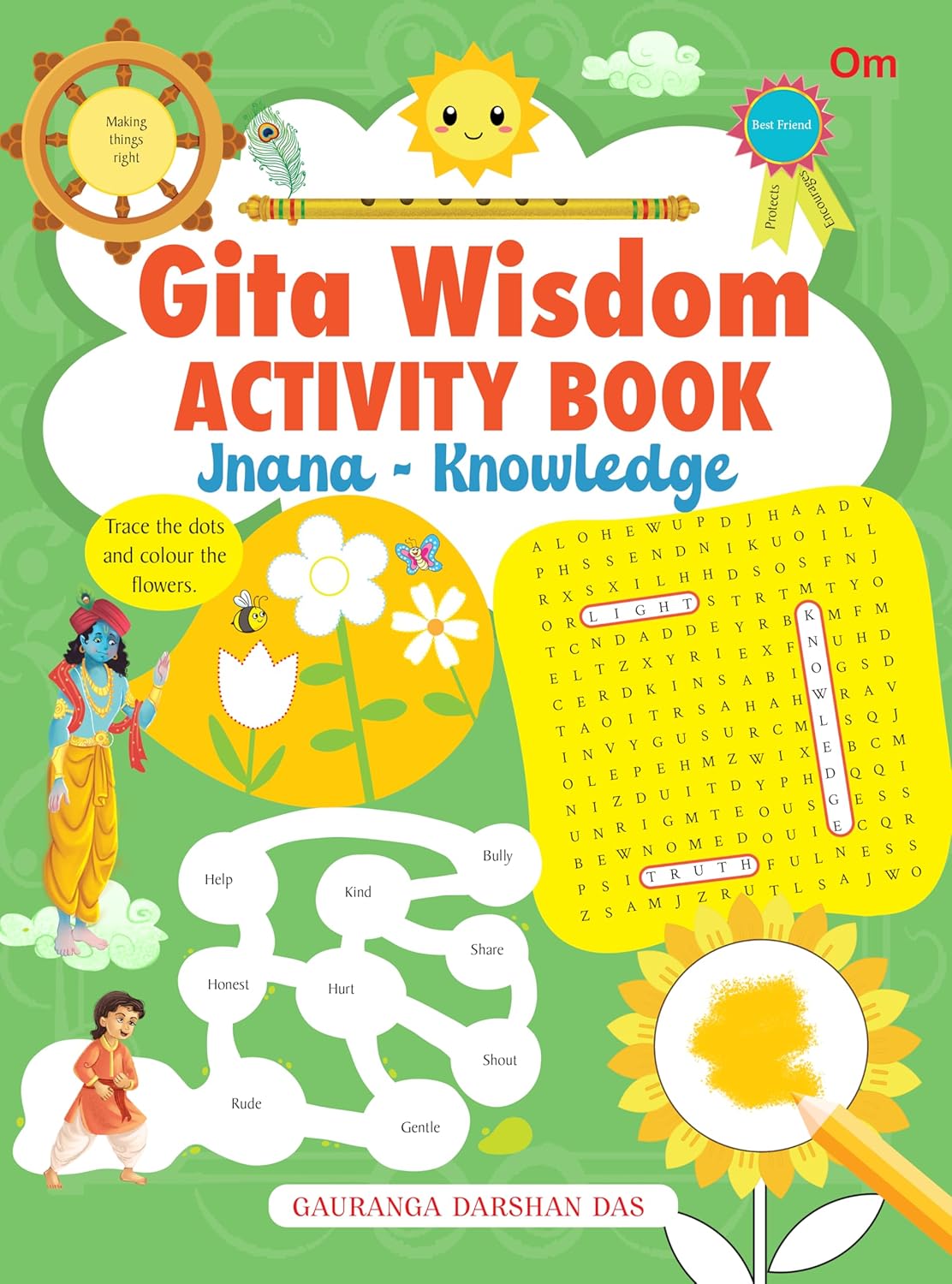
Featured Gita Wisdom Activity Book: Jnana - Knowledge
Gita Wisdom Activity Book: Jnana - Knowledge
English 48 p.

Unlock the Wisdom of the Gita through Fun and Engaging Activities! Step into the Gita Wisdom Activity Book, the perfect companion to the beloved Gita Wisdom Tales series. This series includes five books with 50 Bhagavad Gita verses and 100 timeless stories by award-winning author Gauranga Darshan Das. This interactive workbook helps you revisit inspiring stories, reflect on lessons, and apply their wisdom in daily life. With three exciting levels of activities such as fun puzzles, thought-provoking questions, and hands-on challenges, there is something for everyone. Designed to spark curiosity, inspire discussions, and encourage self-discovery, this book makes learning a joyful adventure. Whether exploring alone or with family and friends, get ready to turn wisdom into wonder. Are you ready for the journey? Grab your pencils and begin!
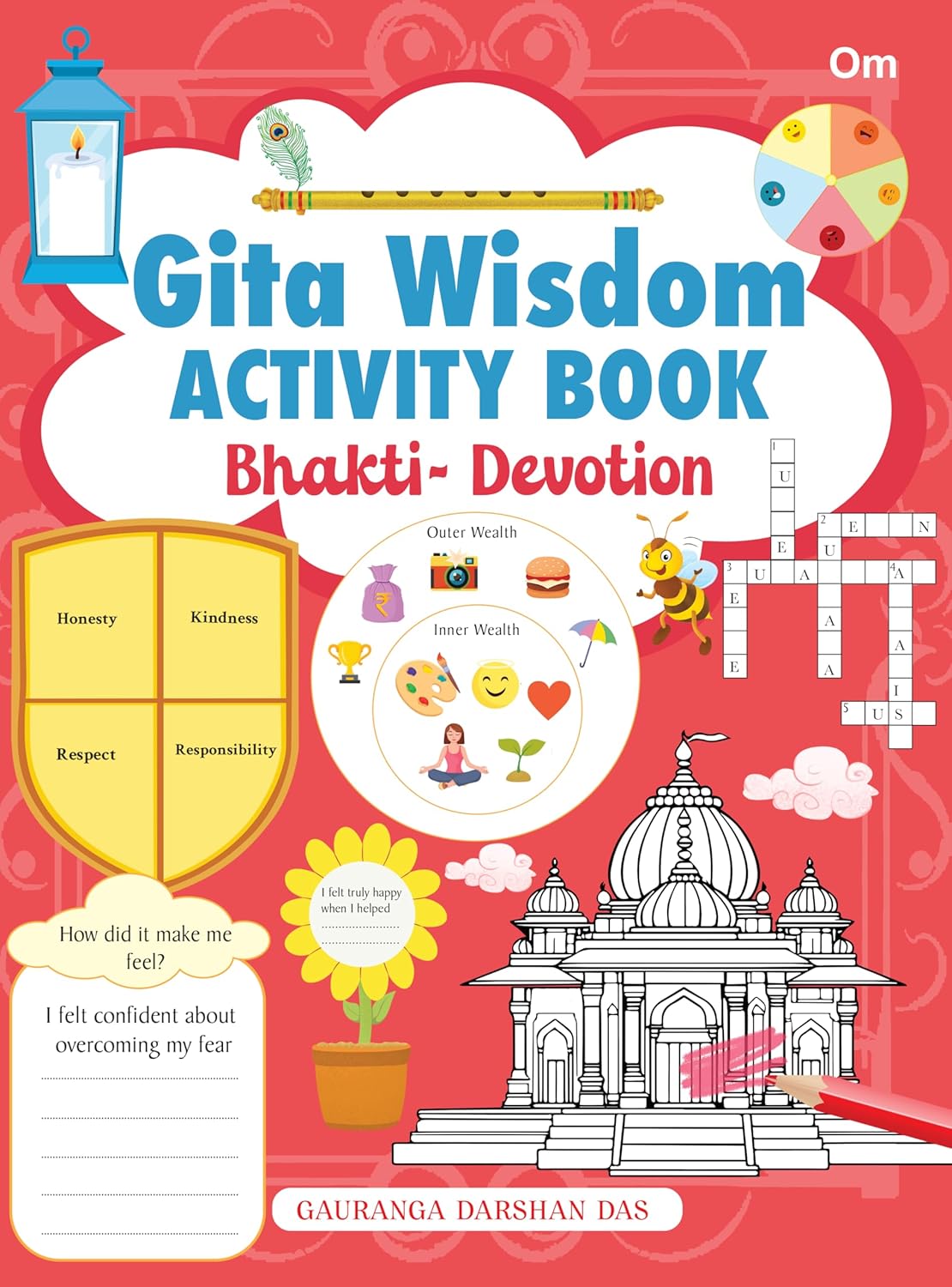
Featured Gita Wisdom Activity Book: Bhakti - Devotion
Gita Wisdom Activity Book: Bhakti - Devotion
English 48 p.

Unlock the Wisdom of the Gita through Fun and Engaging Activities! Step into the Gita Wisdom Activity Book, the perfect companion to the beloved Gita Wisdom Tales series. This series includes five books with 50 Bhagavad Gita verses and 100 timeless stories by award-winning author Gauranga Darshan Das. This interactive workbook helps you revisit inspiring stories, reflect on lessons, and apply their wisdom in daily life. With three exciting levels of activities such as fun puzzles, thought-provoking questions, and hands-on challenges, there is something for everyone. Designed to spark curiosity, inspire discussions, and encourage self-discovery, this book makes learning a joyful adventure. Whether exploring alone or with family and friends, get ready to turn wisdom into wonder. Are you ready for the journey? Grab your pencils and begin!
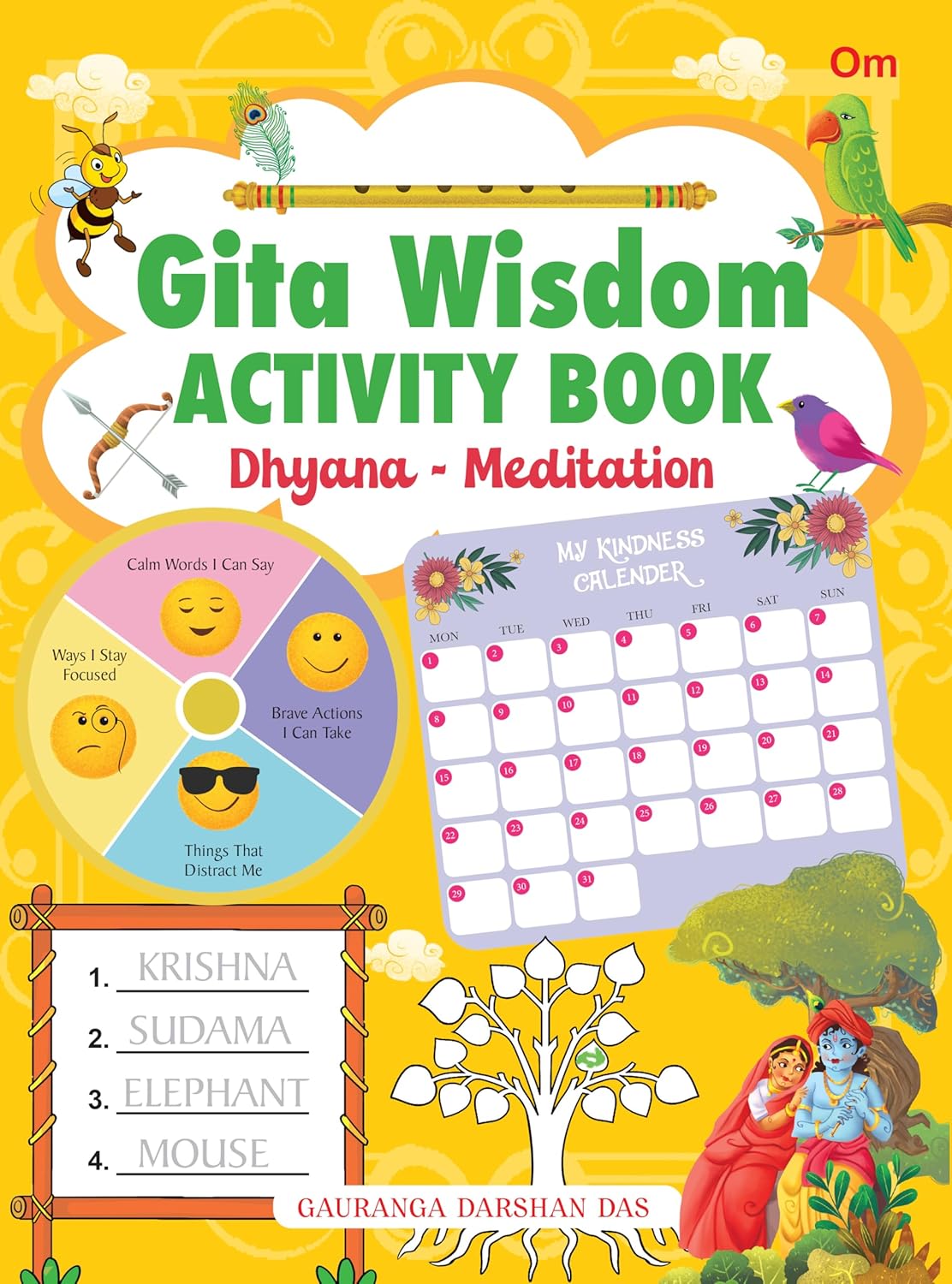
Featured Gita Wisdom Activity Book: Dhyana - Meditation
Gita Wisdom Activity Book: Dhyana - Meditation
English 48 p.

Unlock the Wisdom of the Gita through Fun and Engaging Activities! Step into the Gita Wisdom Activity Book, the perfect companion to the beloved Gita Wisdom Tales series. This series includes five books with 50 Bhagavad Gita verses and 100 timeless stories by award-winning author Gauranga Darshan Das. This interactive workbook helps you revisit inspiring stories, reflect on lessons, and apply their wisdom in daily life. With three exciting levels of activities such as fun puzzles, thought-provoking questions, and hands-on challenges, there is something for everyone. Designed to spark curiosity, inspire discussions, and encourage self-discovery, this book makes learning a joyful adventure. Whether exploring alone or with family and friends, get ready to turn wisdom into wonder. Are you ready for the journey? Grab your pencils and begin!
New Releases

Latest Publications

Gita Wisdom Activity Book: Karma - Action

Unlock the Wisdom of the Gita through Fun and Engaging Activities! Step into the Gita Wisdom Activity Book, the perfect companion to the beloved Gita Wisdom Tales series. This series includes five books with 50 Bhagavad Gita verses and 100 timeless stories by award-winning author Gauranga Darshan Das. This interactive workbook helps you revisit inspiring stories, reflect on lessons, and apply their wisdom in daily life. With three exciting levels of activities such as fun puzzles, thought-provoking questions, and hands-on challenges, there is something for everyone. Designed to spark curiosity, inspire discussions, and encourage self-discovery, this book makes learning a joyful adventure. Whether exploring alone or with family and friends, get ready to turn wisdom into wonder. Are you ready for the journey? Grab your pencils and begin!
Gita Wisdom Activity Book: Jnana - Knowledge

Unlock the Wisdom of the Gita through Fun and Engaging Activities! Step into the Gita Wisdom Activity Book, the perfect companion to the beloved Gita Wisdom Tales series. This series includes five books with 50 Bhagavad Gita verses and 100 timeless stories by award-winning author Gauranga Darshan Das. This interactive workbook helps you revisit inspiring stories, reflect on lessons, and apply their wisdom in daily life. With three exciting levels of activities such as fun puzzles, thought-provoking questions, and hands-on challenges, there is something for everyone. Designed to spark curiosity, inspire discussions, and encourage self-discovery, this book makes learning a joyful adventure. Whether exploring alone or with family and friends, get ready to turn wisdom into wonder. Are you ready for the journey? Grab your pencils and begin!

Gita Wisdom Activity Book: Bhakti - Devotion

Unlock the Wisdom of the Gita through Fun and Engaging Activities! Step into the Gita Wisdom Activity Book, the perfect companion to the beloved Gita Wisdom Tales series. This series includes five books with 50 Bhagavad Gita verses and 100 timeless stories by award-winning author Gauranga Darshan Das. This interactive workbook helps you revisit inspiring stories, reflect on lessons, and apply their wisdom in daily life. With three exciting levels of activities such as fun puzzles, thought-provoking questions, and hands-on challenges, there is something for everyone. Designed to spark curiosity, inspire discussions, and encourage self-discovery, this book makes learning a joyful adventure. Whether exploring alone or with family and friends, get ready to turn wisdom into wonder. Are you ready for the journey? Grab your pencils and begin!

Gita Wisdom Activity Book: Dhyana - Meditation

Unlock the Wisdom of the Gita through Fun and Engaging Activities! Step into the Gita Wisdom Activity Book, the perfect companion to the beloved Gita Wisdom Tales series. This series includes five books with 50 Bhagavad Gita verses and 100 timeless stories by award-winning author Gauranga Darshan Das. This interactive workbook helps you revisit inspiring stories, reflect on lessons, and apply their wisdom in daily life. With three exciting levels of activities such as fun puzzles, thought-provoking questions, and hands-on challenges, there is something for everyone. Designed to spark curiosity, inspire discussions, and encourage self-discovery, this book makes learning a joyful adventure. Whether exploring alone or with family and friends, get ready to turn wisdom into wonder. Are you ready for the journey? Grab your pencils and begin!

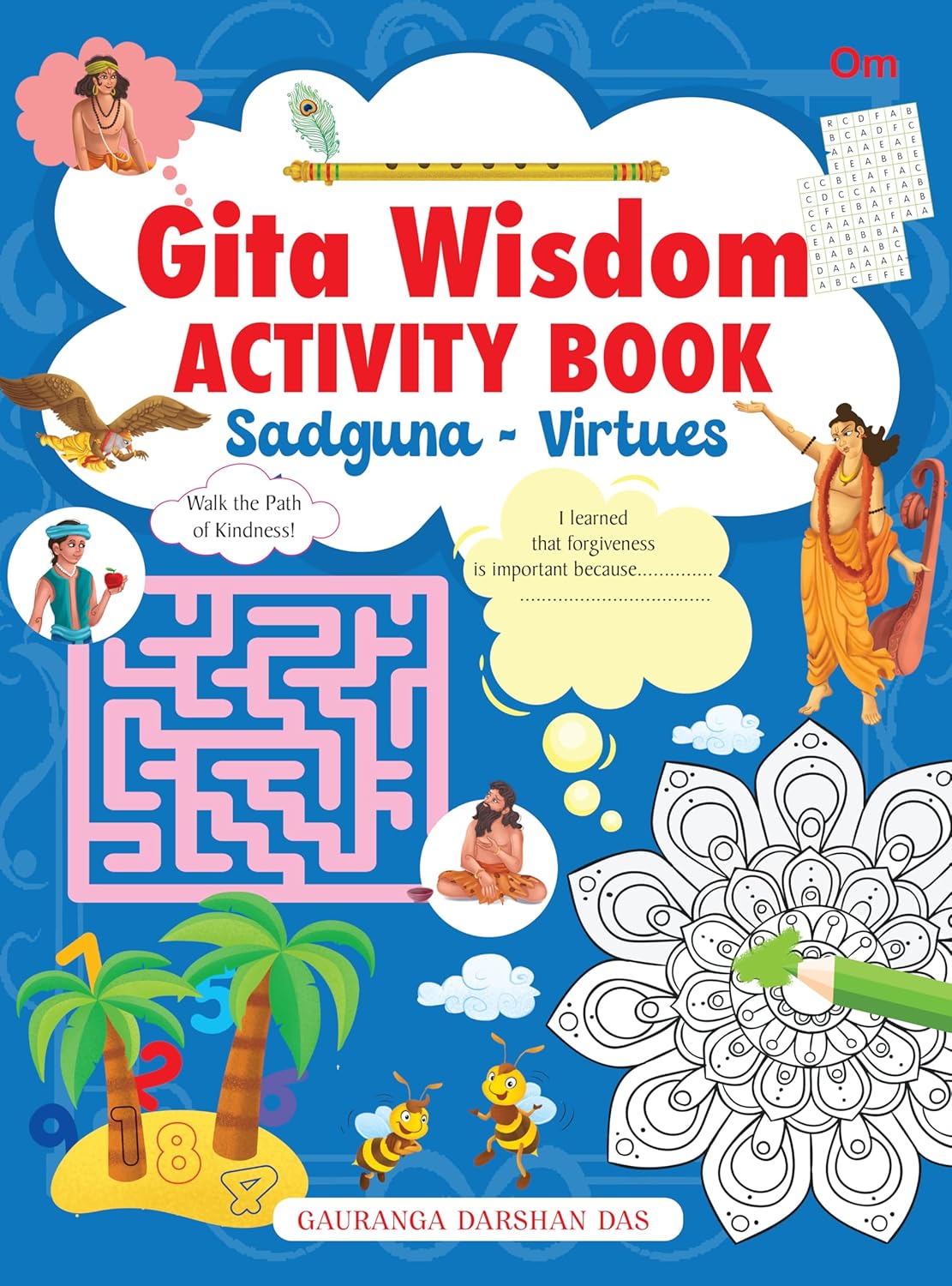
Gita Wisdom Activity Book: Sadguna - Virtues

Unlock the Wisdom of the Gita through Fun and Engaging Activities! Step into the Gita Wisdom Activity Book, the perfect companion to the beloved Gita Wisdom Tales series. This series includes five books with 50 Bhagavad Gita verses and 100 timeless stories by award-winning author Gauranga Darshan Das. This interactive workbook helps you revisit inspiring stories, reflect on lessons, and apply their wisdom in daily life. With three exciting levels of activities such as fun puzzles, thought-provoking questions, and hands-on challenges, there is something for everyone. Designed to spark curiosity, inspire discussions, and encourage self-discovery, this book makes learning a joyful adventure. Whether exploring alone or with family and friends, get ready to turn wisdom into wonder. Are you ready for the journey? Grab your pencils and begin!

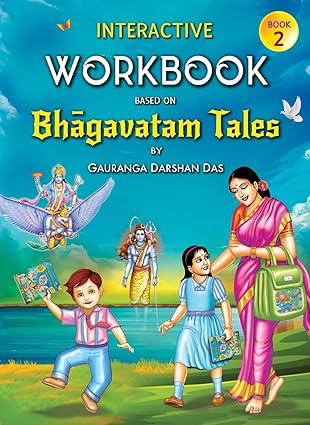
Interactive Workbook Based on Bhagavatam Tales Part 2

Embark on an exciting journey to revisit the Bhāgavatam Tales like never before! This workbook is your special companion to the Bhagavatam Tales series by Gauranga Darshan Das, helping you dive deeper into over 200 inspiring tales and uncover the life lessons they hold. Packed with engaging activities across three levels of difficulty-fun for young learners, thought-provoking for older kids, and practical challenges for those ready to level up—this workbook is designed to spark curiosity, encourage reflection, and inspire meaningful discussions with family and friends. Most importantly, this categorisation ensures this book summons a reread value – something children will love to come back to even long after reading the stories.

Wisdom & Reflections

Featured Articles

View All (3) →
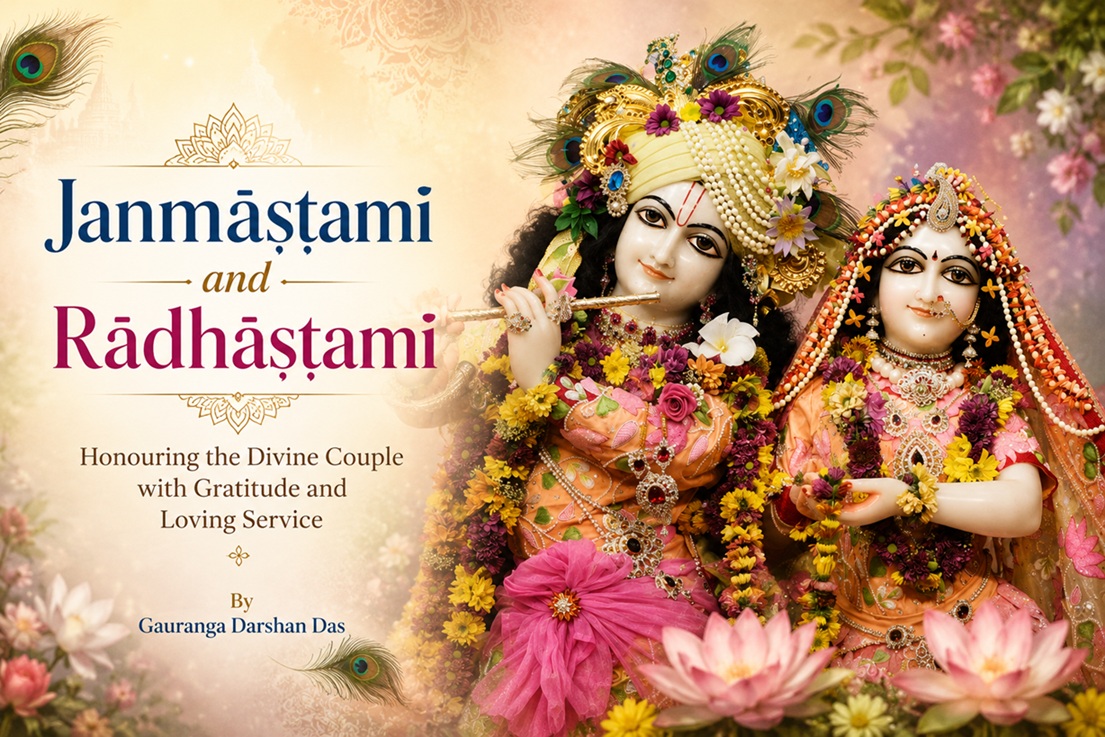
Janmāṣṭamī and Rādhāṣṭamī: Honouring the Divine Couple with Gratitude and Loving Service

Every year, devotees across the world joyfully celebrate two of the most cherished festivals in the Vaiṣṇava calendar—Śrī Kṛṣṇa Janmāṣṭamī and Śrī Rādhāṣṭamī, the auspicious appearance days of Śrī Kṛṣṇa and Śrīmatī Rādhārāṇī. Temples adorned with flowers and sparkling decorations resound with melodious kīrtanas and hari-kathā as devotees celebrate these sacred occasions through worship, chanting, dancing, fasting and feasting. Yet these festivals are far more than annual commemorations of two divine appearance days. Together, they reveal the heart of Gauḍīya Vaiṣṇava theology. Kṛṣṇa is the supreme object of love, while Śrīmatī Rādhārāṇī is the supreme embodiment of love for Him. Kṛṣṇa enchants the entire universe (jagan-mohana), yet Śrī Rādhā enchants even Kṛṣṇa Himself (jagan-mano-mohana-citta-mohinī). Janmāṣṭamī invites us to meditate on Śrī Kṛṣṇa's unlimited beauty, sweetness and compassion, while Rādhāṣṭamī invites us to contemplate on Śrīmatī Rādhārāṇī's unparalleled devotion and seek Her blessings to develop sincere devotion for Kṛṣṇa. In truth, these two appearances are inseparable, complementary manifestations of divine compassion. Kṛṣṇa appears to bestow His association upon the conditioned souls and delight His eternal devotees with His enchanting pastimes. Śrīmatī Rādhārāṇī appears to reveal the supreme glory of selfless, pure devotion to Kṛṣṇa. We are eternal aṁśas of Kṛṣṇa (Bhagavad-gītā 15.7), and whatever devotion awakens within our hearts is but a tiny aṁśa of Śrīmatī Rādhārāṇī's limitless devotion, bestowed upon us by Her causeless mercy. The Compassion Behind Kṛṣṇa's Descent The circumstances of Kṛṣṇa's appearance beautifully reveal both His majesty and His sweetness. He first appeared before Vasudeva and Devakī in the prison of Kaṁsa in His majestic four-armed form, inspiring them to offer heartfelt prayers in awe and reverence. By His inconceivable potency, He simultaneously manifested in Gokula as the beloved son of Nanda Mahārāja and Mother Yaśodā. Thus, in Mathurā He revealed His aiśvarya, or divine majesty, while in Vraja He revealed His incomparable mādhurya, His intimate sweetness. Unlike ordinary living beings, Lord Kṛṣṇa does not appear under the force of karma. His appearance is entirely transcendental, arising solely from His own independent will. Therefore, He declares in the Bhagavad-gītā: janma karma ca me divyam evaṁ yo vetti tattvataḥtyaktvā dehaṁ punar janma naiti mām eti so 'rjuna "One who knows the transcendental nature of My appearance and activities does not, upon leaving the body, take birth again in this material world, but attains My eternal abode, O Arjuna." (Bhagavad-gītā 4.9) The Lord descends to protect His devotees, curb the influence of the wicked and re-establish the principles of dharma. Yet beyond these well-known purposes lies an even more intimate reason for His appearance—to reciprocate with the love of His devotees. His descent is not merely a divine intervention in history but an invitation to every soul to revive its eternal relationship of loving reciprocation with Him. Śukadeva Gosvāmī beautifully reveals this confidential purpose: anugrahāya bhaktānāṁ manuṣaṁ deham āśritaḥbhajate tādṛśīḥ krīḍā yāḥ śrutvā tat-paro bhavet "To bestow His mercy upon His devotees, the Supreme Lord accepts a humanlike form and performs such wonderful pastimes that anyone who hears about them becomes devoted to Him." (Śrīmad-Bhāgavatam 10.33.36) Kṛṣṇa appears not merely to demonstrate His supremacy but to reveal His affection through His enchanting pastimes with His pure-hearted devotees, especially the residents of Vṛndāvana. There He lovingly reciprocates in the mellows of servitorship, friendship, parental affection and conjugal love. Although He is the all-powerful Supreme Lord, He willingly becomes conquered by the love of His devotees (bhaktair jitatvam). In doing so, He proclaims the unparalleled glory of bhakti, the supreme spiritual path that reconnects the eternal soul with its beloved Lord. Janmāṣṭamī thus offers us an opportunity to meditate deeply on Kṛṣṇa's boundless compassion. Although we have forgotten Him for countless lifetimes and become entangled in material existence, He has never forgotten us, rather accompanies us as the Supersoul within our hearts, patiently guiding us, witnessing our struggles, and waiting for the day we voluntarily turn toward Him. Out of His causeless mercy, He descends into this world, performs captivating pastimes, speaks timeless wisdom through the Bhagavad-gītā, and sends His pure devotees and scriptures to repeatedly remind us of our eternal relationship with Him. His desire is not to punish the conditioned souls but to reclaim them with love. Therefore, Janmāṣṭamī is much more than a celebration of Kṛṣṇa's appearance in Mathurā over five thousand years ago. It is an opportunity to pause and reflect upon His unending efforts to bring us back to Him. As we gaze upon the beautiful Deities, hear the narrations of His divine pastimes and chant His holy names, our hearts can naturally respond with gratitude. We may pray, "My dear Lord Kṛṣṇa, You descended from Your eternal abode solely to bestow Your mercy upon us. You performed enchanting pastimes to attract our hearts, spoke the Bhagavad-gītā to guide us, and continue to reach out to us through Your empowered devotees. Please help me recognise Your compassion, respond to Your loving invitation, and dedicate my life more sincerely to the path of bhakti." The Lord's appearance in the dark prison of Kaṁsa is also deeply symbolic. Just as His presence immediately dispelled the darkness of that prison, His presence in our hearts dispels the darkness of ignorance, fear and material attachment. When we sincerely invite Kṛṣṇa into our lives through devotional service, He gradually transforms our consciousness, replacing despair with hope, confusion with wisdom, and material anxiety with the joy of loving service. And the highest expression of that loving service is personified by Śrīmatī Rādhārāṇī. If Kṛṣṇa's compassion inspires us to dedicate our lives to Him, Śrīmatī Rādhārāṇī's spotless devotion inspires and empowers us to love Him in the purest possible way. It is to Her sublime example and boundless mercy that we now turn. The Gift of Śrīmatī Rādhārāṇī's Appearance Rādhāṣṭamī invites us to marvel at the unsurpassed glory of the one who loves Kṛṣṇa the most. Just as the flower and its fragrance are inseparable, Śrī Śrī Rādhā and Kṛṣṇa are eternally united, together revealing the complete truth of divine love. Śrīmatī Rādhārāṇī manifested in the home of King Vṛṣabhānu and Queen Kīrtidā in the sacred land of Vraja. Although She appeared as an exquisitely beautiful child, She kept Her eyes closed from birth. When Mother Yaśodā visited with baby Kṛṣṇa in Her arms, Rādhārāṇī opened Her eyes for the very first time, beholding His enchanting face. This cherished pastime beautifully conveys that Her entire existence is meant for Kṛṣṇa. Every aspect of Her being is dedicated to His service, His pleasure, and His glory. For this reason, Śrīla Kṛṣṇadāsa Kavirāja Gosvāmī introduces Śrīmatī Rādhārāṇī with one of the most profound descriptions: devī kṛṣṇa-mayī proktā rādhikā para-devatā (Caitanya-caritāmṛta, Ādi-līlā 4.83). The expression kṛṣṇa-mayī means "completely pervaded by Kṛṣṇa" or "filled with Kṛṣṇa." It signifies far more than constant remembrance of Kṛṣṇa. Every faculty of Śrīmatī Rādhārāṇī's being exists solely for Him. Her eyes delight in beholding His beautiful form, Her ears rejoice in hearing His names and pastimes, Her voice finds fulfilment in glorifying Him, and Her hands eagerly engage in His service. Her intelligence seeks only what will increase His happiness, and Her heart knows no desire apart from His pleasure. Even Her slightest smile, glance or movement exists only to bring joy to Kṛṣṇa. Ordinary devotion often begins with our own needs. We approach the Lord seeking happiness, protection, guidance or purification. Śrīmatī Rādhārāṇī's love, however, is entirely selfless. Her only concern is Kṛṣṇa's happiness, and His happiness is Her life's fulfilment. Thus, She is not merely the greatest devotee of Kṛṣṇa but the very personification of pure devotion. Kṛṣṇa is the perfection of the Absolute Truth, while Śrīmatī Rādhārāṇī is the perfection of devotion to that Absolute Truth. Although we can never imitate Her devotion, we can seek Her shelter and pray for even a particle of Her selfless mood. Whatever devotion awakens within our own hearts is but a tiny reflection of Her limitless love. Indeed, Lord Kṛṣṇa Himself explains that genuine devotees are sheltered by His divine internal energy: mahātmānas tu māṁ pārtha daivīṁ prakṛtim āśritāḥbhajanty ananya-manaso jñātvā bhūtādim avyayam "O son of Pṛthā, those who are not deluded, the great souls, are under the protection of the divine nature. They are fully engaged in devotional service because they know Me as the Supreme Personality of Godhead, original and inexhaustible." (Bhagavad-gītā 9.13) Śrīla Prabhupāda explains: "In the above-quoted verse from Bhagavad-gītā, the words daivīṁ prakṛtim refer to the control of the internal potency, or pleasure potency, of the Supreme Personality of Godhead. This pleasure potency is manifested as Śrīmatī Rādhārāṇī, or Her expansion Lakṣmī, the goddess of fortune. When the individual jīva souls are under the control of the internal energy, their only engagement is the satisfaction of Kṛṣṇa, or Viṣṇu. This is the position of a mahātmā." (Nectar of Instruction 2) Thus, genuine devotion to Kṛṣṇa flourishes under Śrīmatī Rādhārāṇī's compassionate shelter. We approach Kṛṣṇa most naturally and most successfully by taking shelter of the one who loves Him perfectly. With this understanding, we celebrate Rādhāṣṭamī not merely as the appearance day of an exalted devotee but as the advent of the Supreme Goddess of Devotion, who nourishes our relationship with Kṛṣṇa. By glorifying and worshipping Her, we pray to replace self-interest with selfless service, and material expectations with wholehearted dedication to Kṛṣṇa's satisfaction. The true significance of Rādhāṣṭamī, therefore, is not simply to admire Śrīmatī Rādhārāṇī's devotion but to pray for a drop of it. As we sincerely seek Her shelter, our hearts gradually become reoriented toward Kṛṣṇa's happiness rather than our own, allowing us, however faintly, to understand the profound meaning of becoming kṛṣṇa-maya. Janmāṣṭamī reveals the all-attractive Lord, while Rādhāṣṭamī reveals the supreme embodiment of love whose devotion captivates even Him. Together they unveil the complete science of bhakti, teaching us not only whom to love, but also how to love Him. Honouring the Divine Couple in Our Lives The festivals of Janmāṣṭamī and Rādhāṣṭamī are not merely occasions for remembering sacred events of the past. They are invitations to transform our devotional lives. Janmāṣṭamī reminds us that the Supreme Lord is not an impersonal force or a distant ruler beyond the reach of His devotees. He is the all-attractive Śrī Kṛṣṇa, whose beauty captivates every heart and whose compassion draws even the most fallen souls toward Him. Rādhāṣṭamī, in turn, reveals the spirit in which the loving invitation from Kṛṣṇa is to be accepted. Śrīmatī Rādhārāṇī demonstrates that the essence of devotion lies not in what we receive from Kṛṣṇa, but in seeking His happiness. Her spotless devotion reveals the perfection of selfless love. As Śrīla Kṛṣṇadāsa Kavirāja Gosvāmī explains: ātmendriya-prīti-vāñchā—tāre bali 'kāma'kṛṣṇendriya-prīti-icchā dhare 'prema' nāma "The desire to gratify one's own senses is called kāma (lust), whereas the desire to please the senses of Lord Kṛṣṇa is called prema (love)." (Caitanya-caritāmṛta, Ādi-līlā 4.165) This profound teaching has practical implications for every devotee. Love naturally expresses itself through service with pure intention. Whether offering a flower, worshipping the Deities, chanting the holy names, serving the Vaiṣṇavas, or performing the smallest task, every act becomes spiritually beautiful when done solely for Kṛṣṇa's pleasure. Cleanliness in the temple, attentiveness in worship, punctuality in service, and sincerity in our dealings are not mere disciplines—they are expressions of love. Another hallmark of Śrīmatī Rādhārāṇī's devotion is complete freedom from selfishness. This same spirit shines throughout Vṛndāvana. The Vrajavāsīs rejoice whenever Kṛṣṇa is pleased, regardless of who receives the opportunity to serve Him. Their happiness lies not in personal recognition but in His satisfaction. As we learn to celebrate Kṛṣṇa's pleasure above our own prestige and preferences, our hearts become purified and our devotion deepens. Ultimately, Rādhāṣṭamī invites us to become, in our own small measure, kṛṣṇa-maya. We can never imitate Śrīmatī Rādhārāṇī's limitless love, yet we can sincerely aspire to follow Her example. Spiritual advancement is nothing but the gradual reorientation of our lives toward Kṛṣṇa. Little by little, our thoughts, words and actions become centred on His pleasure. Śrīla Rūpa Gosvāmī beautifully describes the transformation that takes place in the heart of one whose life becomes absorbed in Kṛṣṇa: nāmāni praṇayena te sukṛtināṁ tanvanti tuṇḍotsavaṁdhāmāni prathayanti hanta jalada-śyāmāni netrāñjanamsāmāni śruti-śaṣkulīm muralikā-jātāny alaṅkurvatekāmānīvṛta-cetasām iha vibho nāśāpi naḥ śobhate "Now that we have become Your devotees, Your holy names have affectionately created a jubilant festival in our mouths. Your bodily splendour, like a dark raincloud, has become the black ointment of our eyes, and the music of Your flute has become the ornament of our ears. We no longer take pleasure in material things. O Almighty Lord, material pleasures no longer appear beautiful to us."(Padyāvalī 59) When the heart becomes absorbed in Kṛṣṇa, His holy names become a festival for the tongue, His beautiful form becomes the ointment for the eyes, and the sound of His flute becomes the ornament of the ears. Material attractions eventually lose their hold, not through forced renunciation, but because one has discovered a higher taste. Such is the transformation inspired by the mercy of Śrīmatī Rādhārāṇī. The Gauḍīya Vaiṣṇava tradition reaches its most beautiful culmination in the appearance of Śrī Caitanya Mahāprabhu. Śrīla Kṛṣṇadāsa Kavirāja Gosvāmī explains that Śrī Caitanya is none other than Śrī Śrī Rādhā-Kṛṣṇa united in one form: rādhā-kṛṣṇa-praṇaya-vikṛtir hlādinī-śaktir asmādekātmānāv api bhuvi purā deha-bhedaṁ gatau taucaitanyākhyaṁ prakaṭam adhunā tad-dvayaṁ caikyam āptaṁrādhā-bhāva-dyuti-suvalitaṁ naumi kṛṣṇa-svarūpam (Caitanya-caritāmṛta, Ādi-līlā 1.5) Although Śrī Rādhā and Kṛṣṇa are eternally one, They manifested as two to relish the sweetness of Their loving exchanges. Later, They appeared as one again in the form of Śrī Caitanya Mahāprabhu, with Kṛṣṇa accepting the mood and golden complexion of Śrīmatī Rādhārāṇī in order to experience the glory of Her love for Him. Yet He did not come merely to relish that love Himself. He came to distribute it freely through the congregational chanting of the holy names. Recognising this unparalleled compassion, Śrīla Rūpa Gosvāmī offered his celebrated prayer: namo mahā-vadānyāyakṛṣṇa-prema-pradāya tekṛṣṇāya kṛṣṇa-caitanya-nāmne gaura-tviṣe namaḥ "I offer my respectful obeisances unto the most munificent incarnation, Śrī Kṛṣṇa Caitanya, who is Kṛṣṇa Himself appearing with a golden complexion to freely bestow love of Kṛṣṇa." Thus, the celebrations of Janmāṣṭamī and Rādhāṣṭamī naturally lead us to the lotus feet of Śrī Caitanya Mahāprabhu. Janmāṣṭamī reveals the Supreme Beloved. Rādhāṣṭamī reveals the supreme embodiment of love for that Beloved. And Śrī Caitanya Mahāprabhu reveals that this divine love is not reserved for a select few, but is freely offered to every sincere soul. As we celebrate these sacred festivals, may Janmāṣṭamī deepen our appreciation for Śrī Kṛṣṇa, may Rādhāṣṭamī awaken within us a longing to follow the spotless devotion of Śrīmatī Rādhārāṇī, and may the causeless mercy of Śrī Caitanya Mahāprabhu and His followers purify our hearts so that every thought, every word and every action may be offered for the pleasure of Śrī Śrī Rādhā-Kṛṣṇa. For the true purpose of honouring the Divine Couple is not merely to celebrate Their appearance with flowers, songs and festivals, but to allow Their divine love to reshape our hearts. As we honour Janmāṣṭamī and Rādhāṣṭamī year after year, may we gradually learn to love Kṛṣṇa under the compassionate guidance of Śrīmatī Rādhārāṇī. Then Janmāṣṭamī and Rādhāṣṭamī will no longer be merely annual festivals; they will become the guiding inspiration of our lifelong practice of bhakti. Gaurāṅga Darśana Dāsa, a disciple of His Holiness Rādhānāth Swami, is dean of Govardhan School of Education and Culture at ISKCON GEV. He is the author of fifty-three books, including the Subodhini series of study guides, children’s books such as Bhāgavatam Tales, and other self-enrichment books. He offers online and residential scriptural courses for adults and children worldwide.

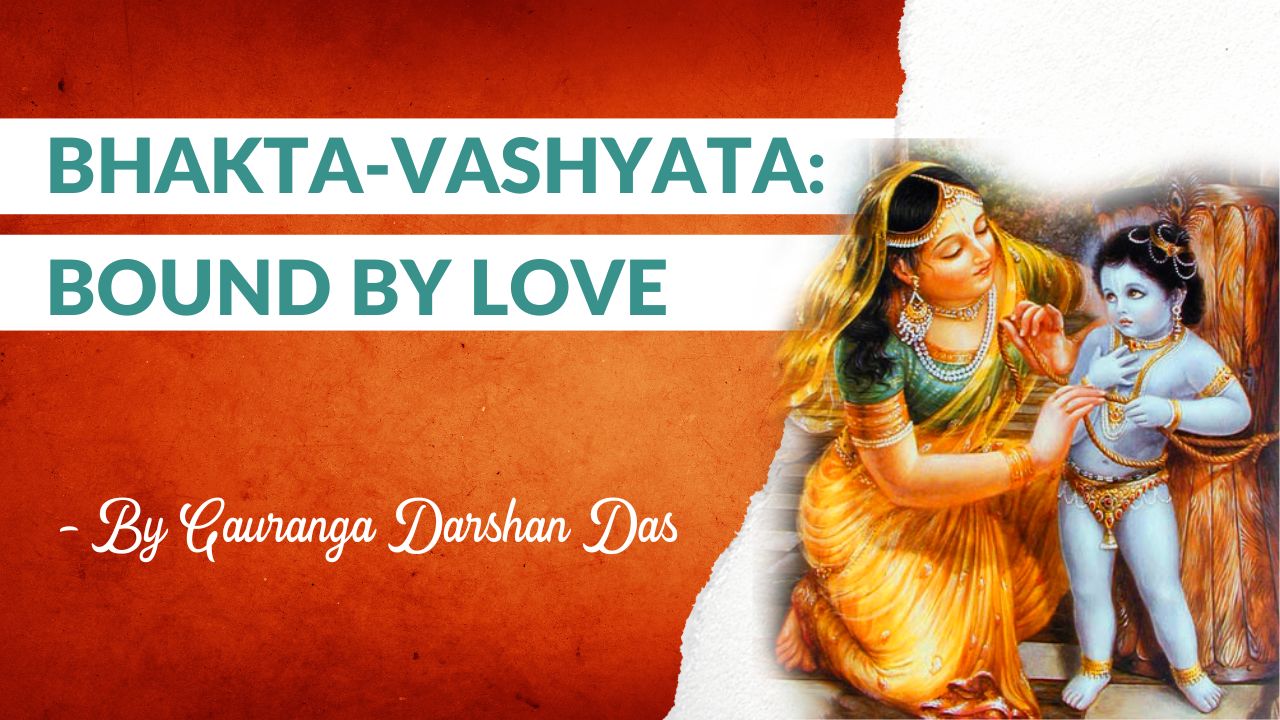
Bhakta-vashyata: Bound by Love

Vaishnava scriptures provide unique insights into one of God’s most endearing qualities. The greatest servants of the all-powerful supreme controller please Him by putting Him under their control. God is defined as the Supreme Being and understood to be the source, master, and controller of everything that be. Thus many people worship Him in reverence and depend on Him for protection. Even God, however, sometimes desires to be controlled by someone else. That controller can only be His pure devotee, who conquers Him by the power of his or her loving devotional service. Various devotees and poets like Srila Shukadeva Goswami describe this quality of the Supreme Godhead, Krishna, with words like bhakta-vashyata (controlled by devotees), bhritya-vashyata (controlled by servitors), bhaktair-jitatvam (conquered by devotees), bhakti-baddham (bound by loving devotion), and bhakta-paradhina (dependent on devotees). The entire universe, with its great, exalted demigods like Lord Shiva, Lord Brahma, and Lord Indra, is under the control of the Supreme Personality of Godhead, Krishna. Yet one of His transcendental attributes is that He comes under the control of His servitors (bhritya-vashyata). Krishna reveals this quality vividly in His various dealings with the Vrajavasis, the residents of Vrindavana, who consider Him their life and soul, and who dedicate their bodies, minds, and words for His pleasure alone. Krishna takes great pleasure in being bound by their loving service through moods like friendship, parental affection, and romantic love. The Supreme Proprietor Steals Lord Krishna is the supreme unrivalled proprietor and master of all the material and spiritual worlds, and He is served by thousands of goddesses of fortune. Nonetheless, He steals butter in the houses of the ladies of Vrindavana, the vraja-gopis, as if He were poverty-stricken. Knowing that Krishna steals butter in their houses, the gopis invent various means to hide the butter from Him, such as hanging the butter pots from the ceiling or keeping them in dark rooms. But Krishna cleverly reaches them by inventing new methods of stealing (steya-yogaih). The gopis relish these activities of Krishna, but externally they rebuke Him. These simple gopis are very much appreciative of Yashoda’s fortune in being Krishna’s mother. But they think she must be bereft of the pleasure of witnessing Krishna’s stealing pastimes, for He wouldn’t steal butter in her house. To give the same pleasure to Yashoda, the gopis go to her house to narrate Krishna’s stealing acts by criticizing and complaining against Him. Krishna’s pastimes are very enchanting, but when His pure devotees like the gopis or Shukadeva Goswami in the Bhagavatam narrate them, they taste more nectarean, being mixed with the love of the devotee. Thus Mother Yashoda experienced a greater pleasure upon hearing about Krishna’s stealing from the gopis than the gopis did by witnessing them. The gopis’ apparent angry complaints are nothing but expressions of their loving affection for Krishna. The Absolute Truth Lies When the gopis complain, Krishna often doesn’t admit His naughty activities. Instead, He speaks many lies against them and claims innocence in front of Mother Yashoda. Krishna is the Supreme Absolute Truth (satyam param), whose eternal existence is beyond the creation, maintenance, and dissolution of this material cosmos, of which He is the ultimate cause. Yet He often lies to the gopis, cheats them, tricks them, bewilders them, and in this way captivates their hearts. Krishna steals butter and performs much mischief in Yashoda’s house, but when questioned by her, He cleverly makes false statements that fascinatingly have deeper and truer meanings. For instance, when Yashoda asked Krishna, “Who distributed butter to the monkeys?” Krishna cleverly replied, “The one who created them!” The Cause Behind the Contradictions The “lies” of the Absolute Truth are a special ornament of His character that charms His devotees. By acting in many contradictory ways, Krishna relishes the love of His devotees and expresses His love for them. To manifest this quality of bhakta-vashyata, Krishna sometimes relinquishes His other opulences and attributes and proudly declares to everyone the glories of His devotees who have full control over Him (darshayams tad-vidam loka atmano bhakta-vashyatam, Bhagavatam 10.11.9). The damodara-lila, the episode in which Krishna’s mother ties Him up, is an unparalleled example of Krishna’s behaving in such contradictory ways to exhibit His quality of bhakta-vashyata. The Self-Satisfied Becomes Hungry One early Dipavali (Diwali) morning, after assigning her maidservants various activities, Mother Yashoda started churning butter for Krishna. She engaged her body in churning, her mind in thinking of her beloved son, and her words in singing about His activities. Her complete absorption attracted Krishna, who is all-attractive and self-satisfied in all respects (atmarama). Krishna got up from sleep and eagerly came to her, hungry for her milk (stanya-kama). He climbed on her lap, His own property, and she started to breast-feed Him. A transcendental competition between Yashoda’s love in the form of her milk and Krishna’s hunger for it started. Both knew no bounds, yet the milk sometimes overflowed from His mouth, forming small rivulets. This feeding went on for a good while, and He lost all sense of time. Peace Personified Becomes Angry Suddenly, the milk of the special Padma-gandha cows boiling in the kitchen started overflowing, and to save it, Yashoda immediately set Krishna down and ran there. Upon being deprived of His mother’s milk, greedy Krishna became very dissatisfied. He is known as vishuddha-sattva-vigraha, or one in pure goodness devoid of any tinges of passion and ignorance. Yet He shed tears and now manifested anger, breaking a pot and stealing the butter in it. He started distributing the butter to monkeys, restlessly looking around, anxious that His mother might come and punish Him at any time. Time Personified Flees in Fear As it is common for a thief to leave some clue, Krishna left a clue for Mother Yashoda to catch Him – His buttery footprints. Following them, Yashoda, desiring to teach a lesson to her naughty child Krishna, the all-knowledgeable, reached there calmly, with a stick in her hand. Krishna was shocked. Although fear personified and even Yamaraja, the lord of death, fear Krishna, He was now fearful of Yashoda’s stick. He ran towards the main gate, hoping that Yashoda wouldn’t punish Him in public. The Fastest Gets Caught Despite her fatigue, Mother Yashoda chased Krishna with great determination, but He looked behind often and always kept Himself at a safe distance, at least a hand’s-length away from her. At times she almost caught Him, but just missed. Yogis cannot capture Krishna within their hearts, and the Upanishads declare that He can run faster than the mind, but now a simple gopi of Vrindavana, Yashoda, finally captured Him, although He wanted to avoid being arrested by her. This is the greatness of her pure love. The Condensed Bliss Cries Although she did not intend to beat Him, Yashoda threatened Krishna by raising her stick. He became more afraid, and He cried, His genuine tears mixing with the black ointment around His eyes. Usually when Krishna cried, Yashoda would wipe His tears with her cloth, but now He rubbed His eyes with His own hands, and thus smeared the ointment all over His face. He trembled in fear and breathed heavily as He cried. Although His soothing smile dries up the ocean of tears created by the lamentation of the conditioned souls, He was now crying in fear of His mother. And although the breathing of His expansion Maha-Vishnu generates millions of universes, He was Himself now breathing heavily in anxiety. The Object of Prayers Gets Scolded Yashoda scolded Krishna for all His offenses – breaking a pot, stealing butter, distributing it to the monkeys, and fleeing away while making her run behind Him. Considering Him her son out of intense maternal affection, she was eager to discipline Him and train Him as a good human being. She rebuked Him by calling Him a restless, greedy, hot-tempered boy, a monkey-lover, and a house-plunderer. She threatened Him, saying that she wouldn’t feed Him milk products or give Him toys or allow Him to play with His playmates. The Supreme Judge Awaits Judgment Krishna was guilty. His fate was completely in His mother’s hands. She might punish Him, bind Him, or release Him at her will. He bent His head low in front of Yashoda and promised her that He wouldn’t do such mischief anymore and anxiously pleaded for her to drop the stick. Because of her intense affection, Yashoda became worried to see His distress and suspected that He might run away due to fear, anger, and fickleness. Unaware of His prowess, she thought it wise to bind Him and keep Him home while she was busy with her household chores. Thus she ordered her servants to get some soft ropes. An Attempt to Bind the All-Pervading The Supreme Lord Krishna pervades all time and space. He has no beginning or end, no exterior or interior, no front or rear, and is beyond sense perception (adhokshaja). Mother Yashoda, considering Him her own child, tried to bind Him to a wooden grinding mortar with a rope. In other words, she tried to tie up with her cords of strong prema the all-pervading Lord of all, who binds up with the ropes of maya everyone from Brahma to the blade of grass. Krishna didn’t want to be bound. He wanted to do His daily routine of stealing yogurt and playing with His friends. So His satya-sankalpa-shakti (power to fulfill His every desire) inspired His vibhuti-shakti (power to show His opulence) to manifest in His body. Thus Mother Yashoda’s rope became two fingers too short in binding Him. She got more and more ropes and tied them together, but the rope was always two fingers too short. Divinity’s Desire vs. the Devotee’s Determination Yashoda’s determination didn’t slacken despite her failure. So Krishna had to transform His desire. Seeing her loving endeavor (parishrama), Krishna became merciful (kripa). His kripa-shakti, which reigns as the king of all His potencies and illuminates them, melts His heart and turns it into butter. It made His satya-sankalpa-shakti and vibhuti-shakti immediately disappear. The distance of two fingers was filled by the devotee’s endeavor and the Lord’s causeless mercy. The bhakta-nishtha, or the firm faith of the devotee seen in his or her tireless endeavors to serve and worship Krishna, and the sva-nishtha, or the steady quality in Krishna that brings forth His mercy upon seeing the devotee’s efforts, causes Krishna to be bound. In the absence of these two, the rope will remain two fingers too short. sva-matuh svinna-gatraya visrasta-kabara-srajah drishtva parishramam krishnah kripayasit sva-bandhane “Because of Mother Yashoda’s hard labor, her whole body became covered with perspiration, and the flowers and comb were falling from her hair. When child Krishna saw His mother thus fatigued, He became merciful to her and agreed to be bound.” (Bhagavatam 10.9.18) The Liberator in Bondage Thus Krishna, who can liberate everyone from material bondage, is Himself bound by the love of His devotee. The rope with which Yashoda bound Him is the rope of her pure love. In this damodara-lila, Krishna shows Yashoda and the whole world that only love can bind Him. And even in that bound state, He retains His quality of liberating others. Therefore He was able to liberate the sons of Kuvera by pulling down the Yamalarjuna trees. (See Canto Ten, Chapter Ten.) In His liberating them, He again exhibited His quality of being controlled by His devotee, because it was His devotee Narada who desired that the sons of Kuvera be liberated by Krishna. The Possessor of All Qualities and Their Opposites To show the quality of being controlled by His devotees, Krishna may sometimes act in ways that go against some of His other qualities. There is no contradiction in this, because Krishna possesses all the qualities and all their opposites too. He is smaller than the smallest and bigger than the biggest. He is within everything and apart from everything. His quality of being merciful to His devotees, because He is controlled by their loving devotional service, stands as the epitome of all His attributes. Thus the process of bhakti is glorified in the damodara-lila. nayam sukhapo bhagavan dehinam gopika-sutah jnaninam chatma-bhutanam yatha bhaktimatam iha “Lord Krishna, the son of Mother Yashoda, is easily accessible to devotees engaged in spontaneous loving service, but not to mental speculators, aspirants of self-realization, or those in bodily identification.” (Bhagavatam 10.9.21) The Devotee Becomes Greater than God Krishna is asamordhva – no one is equal to Him or greater than Him. Some philosophers may want to become one with God, but in Vaishnava philosophy the devotee becomes so much more powerful than God that he or she can control God. The Supreme Godhead Krishna elevates His devotee beyond His own position, just as Arjuna became the hero at Kurukshetra while Krishna was simply his chariot driver. Mother Yashoda is the epitome of vatsalya-rasa, or parental love for Krishna. The word yashoda means “giver of fame.” By binding Krishna with her ropes of love, Yashoda gave Krishna the fame of being controlled by His devotees. The glories of the Supreme Personality of Godhead are proclaimed throughout the Vedas, the Upanishads, the literature of sankhya-yoga, and other Vaishnava literature, yet Mother Yashoda considered that Supreme Person her ordinary child out of Her intense affection for Him (trayya copanishadbhish cha . . . , Bhagavatam 10.8.45). Shukadeva Goswami glorifies her, saying that neither Lord Brahma, nor Lord Shiva, nor even the goddess of fortune, who is always the better half of the Supreme Lord, can obtain from the Supreme Lord, the deliverer from this material world, such mercy as received by Mother Yashoda. (nemam virinco na bhavo . . . , Bhagavatam 10.9.20). To love and be loved is the need and innate nature of every person, not to speak of the Supreme Person, Krishna. Krishna loves every individual soul, who is part of Him, and He desires that every soul also love Him. But only His unalloyed devotees completely realize their relationship with Him and love Him unconditionally. Love includes being controlled and dominated by one’s beloved and thus presenting oneself as a subordinate to such love. Thus Krishna finds great pleasure in being controlled by His unalloyed devotees and is purchased by their love. This quality of Krishna’s is celebrated as bhakta-vashyata.

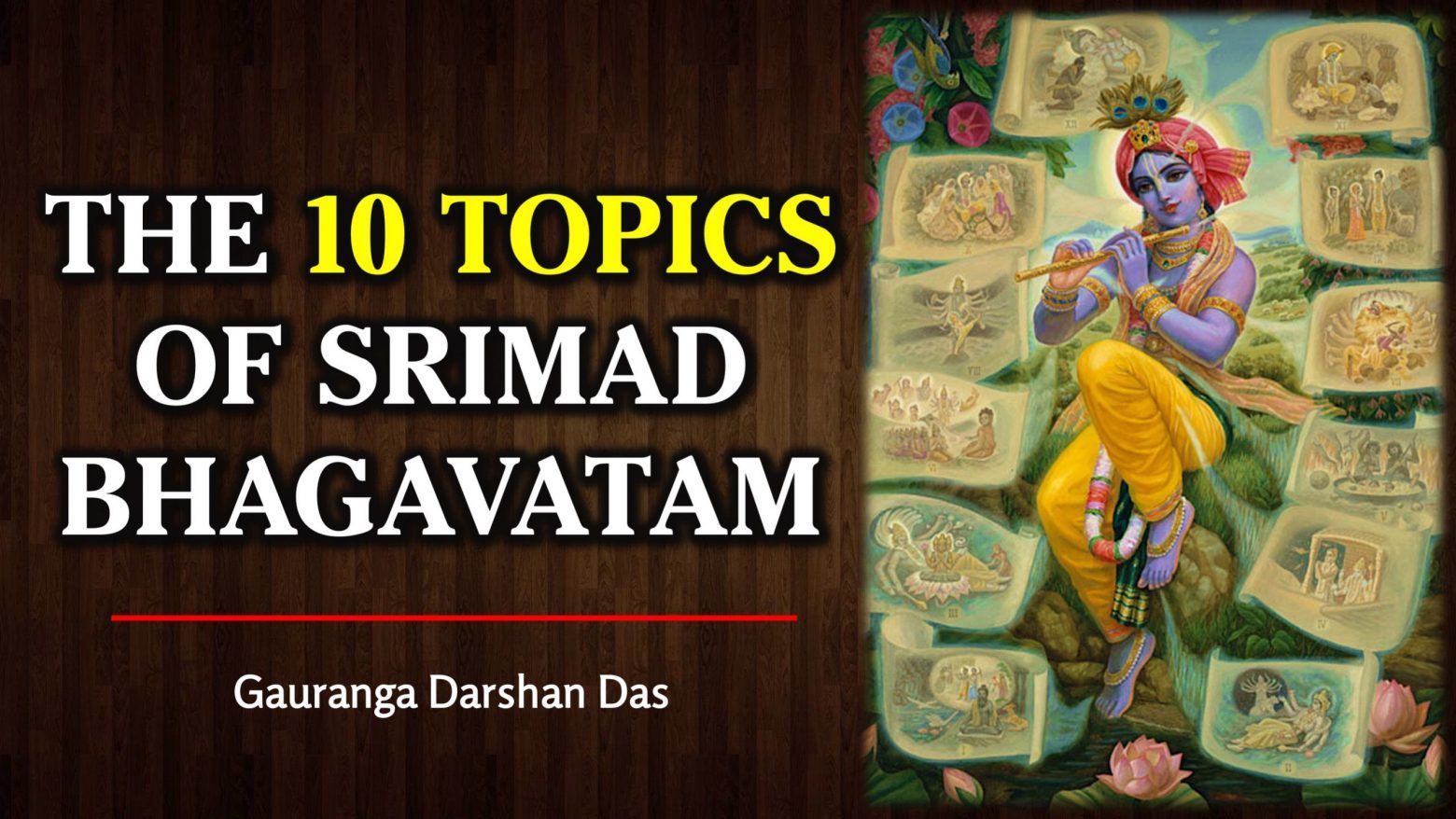
The Ten Topics of Srimad Bhagavatam

A brief outline of the twelve cantos of Srimad-Bhagavatam that represent the bodily limbs of Lord Sri Krsna and present ten transcendental topics. Of all the sacred Vaisnava scriptures, Srimad Bhagavatam is considered the topmost. Lord Sri Caitanya Mahaprabhu hailed the Bhagavatam as the spotless authority (pramanam amalam) amongst the Vedic literatures. Srila Rupa Gosvami, in his Bhakti-rasamrta-sindhu declared that hearing Srimad Bhagavatam is one of the five most potent forms of bhakti-yoga. Srimad Bhagavatam has been compiled by the literary incarnation of Godhead, Srila Vyasadeva, in the maturity of his knowledge. The Bhagavatam is that scripture that gave complete satisfaction to its author, who was not satisfied with his earlier works, including various other Puranas and Mahabharata. All the Vedic scriptures are compared to a desire fulfilling tree and Srimad-Bhagavatam is compared to be the ripened fruit of that desire tree, the essence of all scriptures (akhila-sruti-saram). BHAGAVATAM’S CANTOS ARE LORD KRSNA’S LIMBS Srimad Bhagavatam is non-different from the Supreme Personality of Godhead Lord Krsna. It is the granthavatara or book-incarnation of Lord Krsna, narrating the pastimes of His various avataras. Lord Krsna, after His disappearance, has again returned in the form of this book (sri-krsna parivartita) to shed light on the misdirected civilization of Kali-yuga. Srimad-Bhagavatam has Twelve Cantos that repreasent the limbs of Lord Sri Krsna’s transcendental body. padau yadiyau prathama-dvitiyautrtiya-turyau kathitau yad-urunabhis tatha pancama eva sasthobhujantaram dor-yugalam tathanyaukanthas tu rajan navamo yadiyomukharavindam dasamah praphullamekadaso yasya lalata-pattamsiro’pi tu dvadasa eva bhatitam adidevam karuna-nidhanamtamala-varnam suhitavataramapara-samsara-samudra-setumbhajamahe bhagavata-svarupam “The First and Second Cantos of the Bhagavatam are Sri Krsna’s lotus feet. The Third and Fourth Cantos are His thighs. The Fifth Canto is His navel. The Sixth Canto is His chest. The Seventh and Eighth Cantos are His arms. The Ninth Canto is His throat. The Tenth Canto is His beautiful lotus-face. The Eleventh Canto is His forehead. The Twelfth Canto is His head. I bow down to that Lord, the ocean of mercy whose colour is like that of a tamala tree and who appears in this world for the welfare of all. I worship Him as the bridge for crossing the unfathomable ocean of material existence. The Bhagavatam has appeared as His very Self.” (Padma Purana) Since the Bhagavatam is non-different from Lord Krsna, just as one takes darsana of the deity of Krsna gradually from His lotus feet to the lotus face, one has to study Srimad-Bhagavatam step by step from the first canto to the last. Srila Prabhupada emphasizes, “The only qualification one needs to study this great book of transcendental knowledge is to proceed step by step cautiously and not jump forward haphazardly as with an ordinary book. It should be gone through chapter by chapter, one after another.” (Preface to Srimad Bhagavatam) THE TEN TOPICS OF SRIMAD BHAGAVATAM Glorified as a maha-purana, Srimad Bhagavatam contains ten subjects as described in this verse (SB 2.10.1) atra sargo visargas ca sthanam posanam utayah manvantaresanukatha nirodho muktir asrayah Sarga: universal creation by the Supreme Lord Visarga: secondary creation by Lord Brahma Sthanam: positioning of living entities in various planetary systems Posanam: the Lord’s protection for the devotees Uti: inclination to act Manvantara: the reign of Manus Isanukatha: the topics of the Lord’s various incarnations and His devotees Nirodha: annihilation Mukti: liberation Asraya: the supreme shelter, Lord Krsna. All aspects of knowledge important for human beings, summarized in the above ten categories, are described with various degrees of emphasis and analysis throughout the Srimad-Bhagavatam. Although all these topics are spread throughout the Bhagavatam, each of these topics is more vividly described in specific cantos. The ultimate purpose of the first nine topics is to help us understand the tenth topic, asraya-tattva. The first nine topics deal with the Supreme Lord Krsna’s various energies, expansions, majesty, and greatness. Understanding them helps us better appreciate His personal attributes and activities with His dearest devotees as described in the tenth canto. Without studying the first nine topics, one might perceive the pastimes of Krsna in the tenth canto as ordinary. SRIMAD BHAGAVATAM IN A NUT SHELL The following is a brief outline of the twelve cantos of the Bhagavatam that represent the bodily limbs of Lord Krsna and present the above ten topics. The First Canto and the Second Cantos of the Bhagavatam are considered the lotus feet of Lord Krsna. They form a perfect prelude to the rest of the Bhagavatam by introducing the reader to its key philosophical concepts and prominent characters. They also establish Lord Krsna as the Supreme Personality of Godhead and bhakti-yoga as the topmost spiritual path. In the first canto, Suta Gosvami describes to the Naimisaranya sages, the history of Bhagavatam; the birth and activities of Pariksit Maharaja, who even chastised Kali; and the exclusive dependence of devotees like Uttara, Pandavas, Kunti and Bhisma on Lord Krsna and bhakta-vatsala Krsna’s reciprocation with them. In the second canto, Sukadeva Gosvami describes the supremacy of krsna-bhakti, while presenting various other processes on the Vedic landscape, like demigod worship, meditation on universal form (virat-rupa) and Supersoul (paramatma) as a part of Astanga yoga. He also explains the catuh-sloki (the four seed verses of Bhagavatam) and finally gives the definitions of the ten topics of the Bhagavatam. The Third and the Fourth Cantos correspond to Lord Krsna’s thighs and predominantly describe the topics of sarga and visarga, through the conversation of Vidura and Maitreya. The Third Canto also describes time, embryology, family life, Sankhya, bhakti-yoga, astanga-yoga, jnana-yoga, karma, and the spiritual and the material worlds. We further read the pastimes of Lord Varaha, the descrip­tion of Vaikuntha, the household life of Kardama Muni and Devahuti, and the teachings of Lord Kapila in the Third Canto. The Fourth Canto is very rich in its con­tents. It unveils inspiring and instructive stories of admired personalities like Lord Siva, Suniti, Dhruva, Narada, Anga, Prthu and the Pracetas, who all showed extraordinary examples of bhakti. One can also learn about the unfavorable attitudes in bhakti from the mistakes of characters like Daksa, Suruci, Vena, Indra and Pracinabarhi. We get to witness how the positive transformation undergone by many of these personalities, mainly due the intervention of devotees, adds to the glory of bhakti. Furthermore, the prayers of pure devotees like Dhruva, Prthu and the Pracetas uncover the depths of the foremost aspiration of a devotee: to hear krsna-katha in the association of devotees. The Fifth Canto corresponds to the lotus navel of the Supreme Lord. In this canto, Sukadeva Gosvami continues the topic of visarga and describes the dynasty of Priyavrata, the other son of Manu. Priyavrata’s dynasty consists of several notable personalities like Agnidhra, Nabhi, Lord Rsabhadeva and Bharata in his three lives as a King, a deer and a brahmana. All these episodes culminate in the glorification of bhakti. The latter half of this canto discusses sthanam, the positioning of various planetary systems within the structure of the universe for the inhabitation of various living entities. The canto concludes with a description of various hellish planets. The majesty and grandeur of the Lord’s creation is unfathomable for an ordinary human. It is recommended that one faithfully adhere to the teachings the scriptures and pursue the spiritual path. Note: In the Third, Fourth and Fifth Cantos, Maitreya describes the family lines of Svayambhuva Manu’s descen­dants: Devahuti (3.21-4.1), Akuti (4.1), Prasuti (4.1-7), Uttanapada (4.8-4.31) and Priyavrata (5.1-15). The Sixth Canto represents the chest of Lord Krsna. It is primarily centred on the theme of posanam, or protection offered by the Lord to His devotees, even if they sometimes transgress the laws of dharma accidentally. This canto begins with the glorification of the Lord’s holy names through the episode of Ajamila. Later Sukadeva Gosvami resumes the topic of visarga and describes the living entities generated through the sixty daughters of Daksa. As a part of it, the offenses and the struggles of Indra are described along with the glories of pure devotee Vrtrasura. Vrtrasura’s previous life as King Citraketu reveals the insubstantial nature of material relationships, compassion of a devotee in uplifting a struggling soul, the care needed in dealing with devotees, and the eagerness of the Lord to reclaim His devotees. The canto concludes with the transformation of Diti and Indra by bhakti. The Seventh Canto and the Eighth Canto represent the arms of the Supreme Lord. The Seventh Canto describes uti or inclination, which is of two types – auspicious and inauspicious. The auspicious and inauspicious inclinations of the jivas lead them to perform pious and impious acts, which becomes the cause of their future happiness and distress in various births. The Seventh Canto presents two types of bhakti: (i) suddha-bhakti or pure devotional service of Prahlada (for whom Lord Nrsimhadeva appeared and killed Hiranyakasipu), in the first ten chapters, and (ii) misra-bhakti or mixed devotional service done by varnasrama followers, in the last five chapters. In misra-bhakti, bhakti is mixed with karma or jnana as a major or minor element. The Eighth Canto vividly presents the theme of manvantara or the reign of the Manus. Manus are the administrators of the universe, appointed by the Supreme Lord. There are fourteen Manus who rule in one day of Lord Brahma (kalpa) that spans over 1000 catur-yugas (catur-yuga is the combination of the four yugas namely Satya, Treta, Dvapara and Kali). Thus, each Manu rules for about seventy-one catur-yugas. In every manvantara, there are six kinds of personalities who manage various functions of the universe. They are: the Manu, the sons of Manu, the demigods, Indra, the seven great sages and the Manvantara avatara of the Lord. In this canto, Sukadeva describes the six types of main persons in each of the fourteen manvantaras (past, present and future) in the current day of Brahma, and elaborates selected pastimes of the Lord in some manvantaras. Thus, we hear the episodes of Gajendra, Samudra Manthan, Bali Maharaja’s deliverance by Lord Vamanadeva and the pastimes of Matsya avatara. In all these episodes, the Lord’s protection aspect is vividly described. The Ninth Canto represents the throat of Lord Krsna and predominantly describes isanukatha, or the topics of the Lord and His devotees. This canto describes the stories of various devotees and the Lord’s incarnations in the sun dynasty and the moon dynasty. Some prominent kings of the sun dynasty were Sudyumna, Ambarisa, Sagara, Iksvaku and Lord Ramacandra. And the moon dynasty has kings like Pururava, Yayati, Yadu etc., and Lord Krsna appeared in this dynasty. However glorious a dynasty may be, none of its kings or members forever enjoy its opulence. Only the bhakti one has rendered with a sincere heart remains with the self as an eternal asset. The Tenth Canto of the Bhagavatam represents the beautiful lotus face of Lord Krsna and vividly describes the topic of asraya, or the Supreme shelter Sri Krsna. Sukadeva Gosvami ecstatically describes in this longest canto, the appearance and pastimes of Lord Krsna in Vrndavana, Mathura, Dvaraka, Hastinapura and other places. Krsna’s unlimited transcendental attributes, His amazing reciprocations with the love of His devotees and His compassionate deliverance of those who are inimical to Him, as described in this canto are the worthiest subject matters for one’s contemplation. They constitute the most precious gift for the devotees to absorb themselves in Krsna’s glories. The Eleventh Canto that corresponds to the forehead of Krsna prominently describes the topic of mukti or liberation. This canto mainly deals with the subject matter of the disappearance of Lord Krsna and the enigmatic destruction His Yadu dynasty by the curse of the sages. It contains the highly philosophical conversations between King Nimi and Nava-yogendras, and Lord Krsna and Uddhava (Uddhava-gita) that enlighten us on deeper truth of this universe, various spiritual paths and the supreme spiritual path of bhakti. The Twelfth Canto corresponds to the head of Lord Krsna and describes the topic of nirodha or destruction. There are four types of destruction (or pralaya) namely nitya pralaya or constant deterioration of material objects that happens at every moment; naimittika pralaya or the destruction of planets at the end of Brahma’s day; prakrtika pralaya or destruction of universe at the end of Brahma’s life; and atyantika pralaya or the final destruction of the conditioned soul’s false ego that causes liberation. In front of these great destructions or changes, the small losses we experience in material world including death, are actually insignificant. THE MOST AUTHENTIC NARRATION Thus, Srimad Bhagavatam concisely and categorically presents spiritually rich topics of Supreme Lord Krsna, His various incarnations and devotees, and the process of loving devotional service (bhakti-yoga) unto Him. The Bhagavatam ends with its own unparalleled glories of which the following is just an example. adi-madhyavasanesu vairagyakhyana-samyutam hari-lila-katha-vrata- mrtanandita-sat-suram sarva-vedanta-saram yad brahmatmaikatva-laksanam vastv advitiyam tan-nistham kaivalyaika-prayojanam “From beginning to end, the Srimad-Bhagavatam is full of narrations that encourage renunciation of material life, as well as nectarean accounts of Lord Hari’s transcendental pastimes, which give ecstasy to the saintly devotees and demigods. This Bhagavatam is the essence of all Vedanta philosophy because its subject matter is the Absolute Truth, which, while nondifferent from the spirit soul, is the ultimate reality, one without a second. The goal of this literature is exclusive devotional service unto that Supreme Truth.” (SB 12.13.11-12) The expanse and depth of the Bhagavatam is better appreciated from the commentaries of great acaryas, or spiritual teachers. Srila Prabhupada mentions in his purport to the first verse of Bhagavatam: “…there is no doubt about the authority of the Bhagavatam. Within the past five hundred years, many erudite scholars and acaryas like Jiva Gosvami, Sanatana Gosvami, Visvanatha Cakravarti, Vallabhacarya, and many other distinguished scholars even after the time of Lord Caitanya made elaborate commentaries on the Bhagavatam. And the serious student would do well to attempt to go through them to better relish the transcendental messages.” The study of the Bhagavatam, done in line with the explanations of bona fide Vaisnava acaryas, gives the sincere reader an unparalleled understanding of the Absolute Truth, which is not possible by one’s own speculative efforts. In fact, it is Lord Krsna Himself who speaks through the disciplic succession to enlighten the serious students of the Bhagavatam. Fortunate are those people who effectively utilize their valuable time to relish this condensed nectar even slightly. sarva-vedanta-saram hi sri-bhagavatam isyate tad-rasamrta-trptasya nanyatra syad ratih kvacit Srimad-Bhagavatam is declared to be the essence of all Vedanta philosophy. One who has felt satisfaction from its nectarean mellow will never be attracted to any other literature. (SB 12.13.15)

Begin Your Spiritual Journey Today

Explore our complete catalog of books, study guides, and spiritual commentaries.

Explore Book Collection